


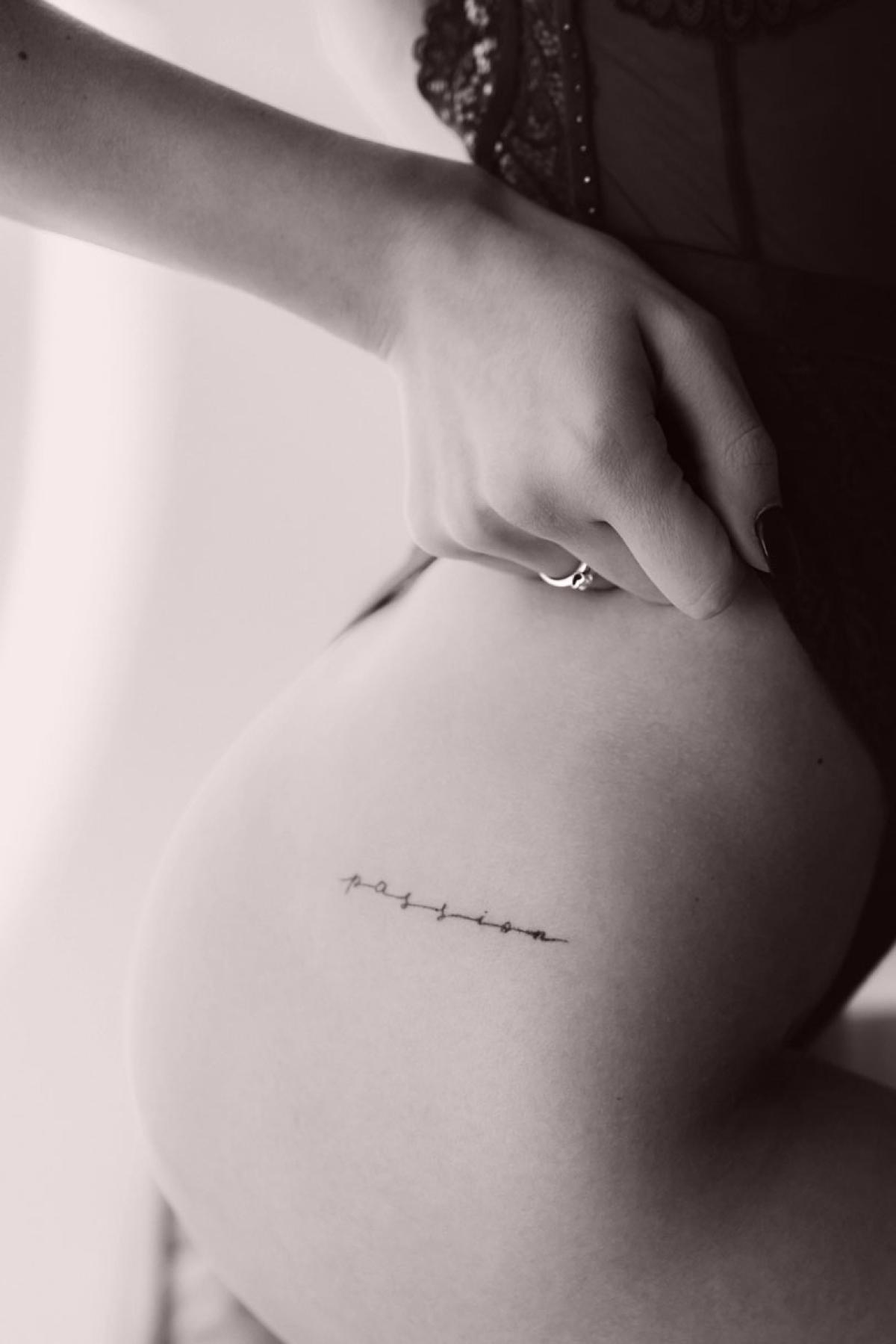

Tattoo Removal
HANDPICO PICOSECOND LASER
Indications: amateur, professional or traumatic tattoos, black and coloured; lightening before a cover-up
Duration: varies with the size of the tattoo
Return to activities: immediate, with local aftercare during healing
Results: gradual, over the sessions
Protocol: 6 to 12 sessions on average, at least 8 weeks apart
Picosecond laser tattoo removal gradually removes or lightens an unwanted tattoo. At the practice in Bidart, near Biarritz, it is performed with the HandPico laser, which combines two wavelengths with picosecond and nanosecond modes to adapt to each tattoo.
HOW IT WORKS
The ultra-short laser pulses break the ink pigments down into very fine particles, which the body then eliminates naturally over the following weeks. The choice of wavelength and mode depends on the colour, depth and density of the ink. This versatility is particularly useful for complex, coloured or resistant tattoos.
INDICATIONS
Gradual removal of black tattoos and certain colours
Lightening a tattoo before a new design or cover-up
Amateur, professional or traumatic tattoos
Older tattoos or tattoos that have resisted previous treatments, depending on the case
THE TREATMENT
At the initial consultation, the tattoo is assessed: size, colours, density, location and age of the ink. This allows a personalised treatment plan and quote to be drawn up. Some inks, particularly white, skin-tone or permanent make-up inks, may react unpredictably; a test area may then be suggested.
The number of sessions varies from one tattoo to another. A simple tattoo may need fewer sessions, while professional, highly coloured tattoos or those made with resistant inks often require a longer course. Sessions are spaced at least 8 weeks apart to give the body time to clear the fragmented pigments and the skin time to recover.
After each session, a temporary local reaction is expected: redness, swelling, a warm sensation, and sometimes small scabs or blisters. You will receive aftercare instructions to support good healing. It is important to avoid sun exposure on the treated area before and during the course of treatment, to limit the risk of pigment changes or scarring.
RESULTS
Tattoo removal is a gradual process: the tattoo fades over the sessions. The outcome depends on the colour and depth of the ink, the quality of the tattoo and the individual response of the skin. Depending on the case, the goal may be substantial fading or sufficient lightening for a cover-up.